
You've spent months perfecting the design of your dream home or new commercial space. The drawings are beautiful, the budget is set, and you're ready to move forward. But then, the project hits the "black hole" of the construction process: Permitting.
For many clients, this is the most frustrating phase. Weeks go by without a word, and "no news" often feels like bad news. However, your architect's job doesn't end when the drawings are finished. In fact, providing regular permit updates is a vital part of their professional responsibility.
Here's why you should expect—and demand—regular updates on your permits.
1. Transparency Eliminates the "Black Hole"
Permitting is inherently bureaucratic, involving "plan checks," zoning reviews, and often multiple city departments. Without updates, it's easy to feel like your project is stalled or forgotten.
What to expect: Regular communication—ideally bi-weekly or whenever a milestone is hit—reassures you that your architect is proactively pushing the project through the system rather than just waiting for a phone call.
Why it matters: When you know what's happening, you can plan accordingly. You're not left wondering if your project is stuck in limbo or if something has gone wrong.
2. Early Detection of Plan Check Hurdles
It's rare for a complex project to be approved on the first submittal. City officials often issue plan check comments or requests for corrections that need to be addressed before approval can proceed.
The architect's role: Your architect should notify you immediately when these comments arrive, explain what they mean, and discuss any potential impacts on your design, budget, or timeline.
Why it matters: Some corrections might require design changes that affect your budget or aesthetic. You deserve to be part of that conversation early, rather than finding out about a major compromise at the end of the process. Early communication helps you make informed decisions and avoid costly surprises.
3. Maintaining Your Construction Timeline
Your general contractor can't schedule crews or order long-lead materials until they have a firm permit issuance date. Delays in permitting can cascade into construction delays, which can be expensive and frustrating.
Coordination is key: When your architect provides regular updates, you can keep your contractor in the loop. This prevents your contractor from moving on to another project because yours wasn't ready when promised.
What to ask for: Request that your architect share permit timelines with your contractor so everyone can plan accordingly. A well-coordinated team means fewer delays and a smoother construction process.
4. Financial Risk Management
Time is quite literally money in construction. Every week of delay can mean:
- Additional carrying costs (loan interest, insurance, property taxes)
- Storage fees for materials ordered too early
- Rising material prices due to market fluctuations
- Lost opportunity costs if you're waiting to move in or open your business
Why regular updates matter: Regular updates allow you to adjust your financial planning and avoid the "sticker shock" of unexpected delays. When you know a delay is coming, you can prepare financially and make informed decisions about your project.
5. Accountability Through Modern Tools
In the past, permit tracking was done through messy spreadsheets and buried emails. Today, there's no excuse for a lack of clarity.
Modern tools: Savvy architects now use tools like Permitful to track milestones and share live project dashboards with their clients. These dashboards show the real-time status of every permit, milestone, and document—all in one place. Here is a screenshot of a public dashboard from Permitful:
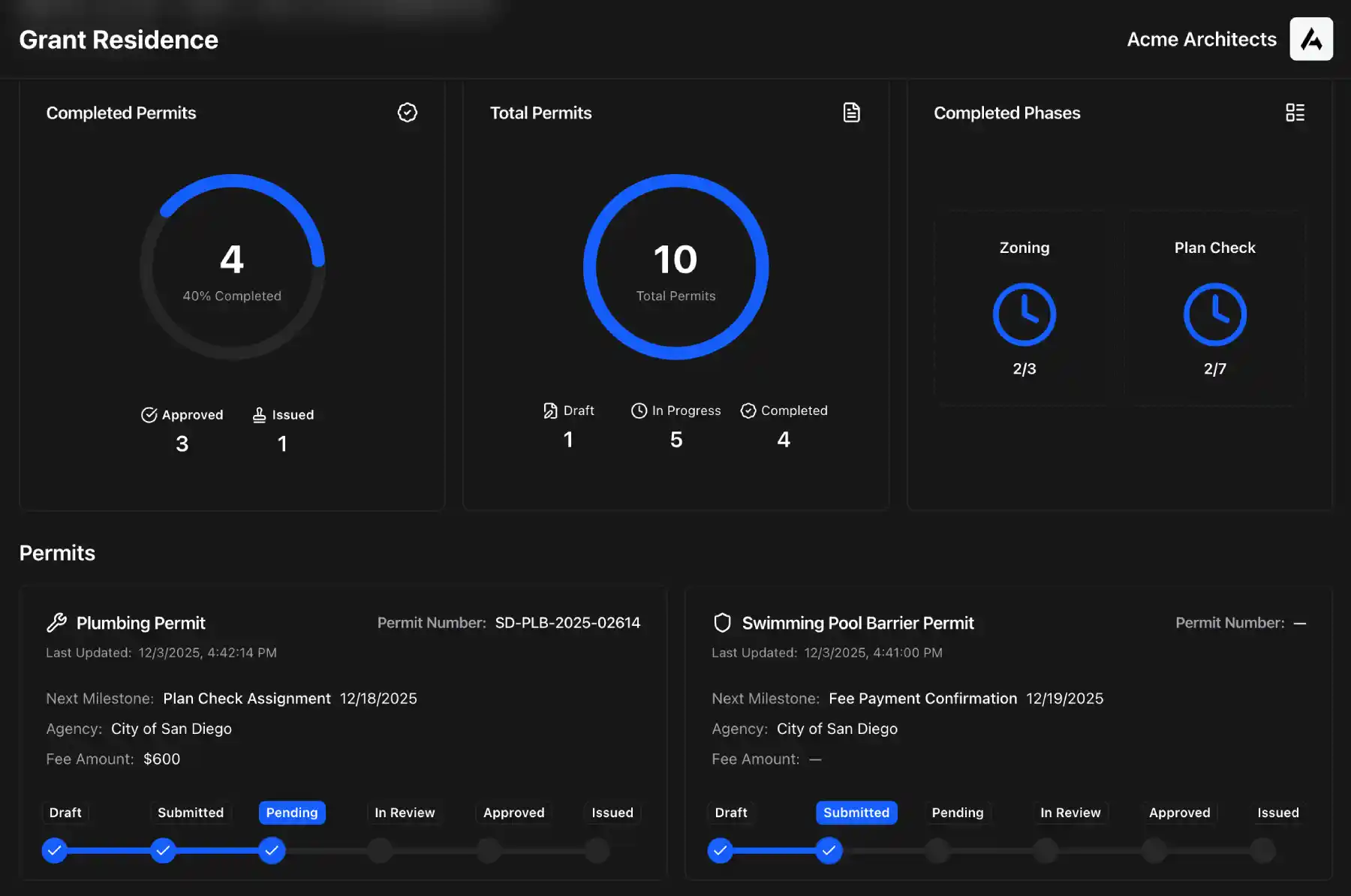
What to ask for: Ask your architect, "Do you have a live dashboard where I can see the status of our various permits in real-time?" If they're using Permitful, they can simply send you a URL that keeps you informed without a single "check-in" email. You can check the status anytime, day or night, without bothering your architect.
What to Expect: The Four Critical Updates
At a minimum, your architect should update you at these four key stages:
1. Submission
What you need: Confirmation that the application has been filed, along with the submission date and any reference numbers. This is your starting point for tracking timelines.
2. Plan Review Comments
What you need: An overview of what the city is asking for, which items need attention, and how long you have to respond. This is when you need to be most involved, as some comments may require design decisions.
3. Resubmission
What you need: Confirmation that corrected plans have been sent back to the city, along with a summary of what was changed. This helps you understand the progress and any potential impacts on your project.
4. Approval
What you need: The "Golden Ticket"—confirmation that your permit has been approved and issued, along with the permit number and any conditions or requirements. This is when you can finally move forward with construction.
How to Advocate for Better Communication
If your architect isn't providing regular updates, here's how to advocate for better communication:
1. Set expectations upfront: During contract negotiations, ask about their communication process for permit tracking. Establish a regular update schedule (e.g., bi-weekly or at each milestone).
2. Ask for a dashboard: Request access to a live project dashboard where you can see permit statuses in real-time. This reduces the need for constant check-ins while keeping you informed.
3. Request milestone notifications: Ask to be notified immediately when key milestones are reached—especially when plan check comments arrive or when approvals are issued.
4. Document everything: Keep a record of all permit-related communications. This helps ensure accountability and provides a paper trail if issues arise.
The Bottom Line
You are the one investing in this project. You shouldn't have to wonder what's happening at the Building Department or whether your project is moving forward. By expecting regular updates—and encouraging your architect to use modern tracking tools—you ensure your project stays on track, on budget, and on its way to reality.
Remember: Good architects understand that transparency builds trust. If your architect is resistant to providing regular updates or using modern tracking tools, that's a red flag. You deserve to be informed, and modern tools make this easier than ever.
Share This With Your Architect
If your architect isn't using modern permit tracking tools, consider sharing this article with them. Permitful helps architects provide better transparency to their clients through public project dashboards that show real-time permit statuses, milestones, and progress—all without requiring constant emails or phone calls.