Ask an AI chatbot, such as ChatGPT, which permits a project needs, and you'll typically get a tidy list in seconds: a building permit, the trade permits, maybe a zoning review. It reads like an expediter's checklist.
The trouble is that permits are local. Which agency issues them, which ones exist at all, and which rules apply this year all depend on exactly where the site is. A list that's right for most of the country can still be wrong for your project, and a confident answer can give you little hint which parts to doubt.
Four Places a Permit List Can Go Wrong
These come from the sample projects we use to test Permit Advisor, each checked against the agency's own pages.
1. The wrong agency
A new house on FM 1626 in Manchaca, Texas, sounds like an Austin project: Manchaca is just south of Austin. But the lot is in unincorporated Travis County, outside any city limits, and the City of Austin doesn't issue its permits. Travis County issues the single-family development permit and the septic permit, and because FM 1626 is a state road, the new driveway needs a permit from TxDOT.
Small towns can be just as tricky. Sisters, Oregon, contracts its building, electrical, plumbing and mechanical permits out to Deschutes County, but the City still does its own land use review. An ADU there needs the City's ADU permit as well as the County's building permits. A list that names only one of them leaves you a permit short.
2. A permit that doesn't exist there
For a bedroom addition to a house in the Village of Woodstock, Vermont, the obvious answer is "you'll need a building permit". But Woodstock lists no building permit for a single-family house, and Vermont's state fire safety permits cover public buildings, not an owner-occupied home. What the project needs is a zoning permit and, because the house is in the village's design review district, a design review. Adding a bedroom can also need a state wastewater permit.
This one is easy to get wrong, and Permit Advisor sometimes does too. A permit that sounds universal isn't always local.
3. A rule that changed
Seattle has long required design review for larger new buildings, such as a seven-story mixed-use building. In October 2025, it adopted interim rules that made design review voluntary for new development while it rewrites the program to meet a new state law. Those rules are temporary, and the permanent ones are still being written, so check the city's current rules before you count on either answer. A chatbot or an older article relying on information from before then could still tell you design review is required.
Rules change every year. The question isn't only "what does the code say?" but "what does the department's website say today?".
4. A permit triggered by where the site is
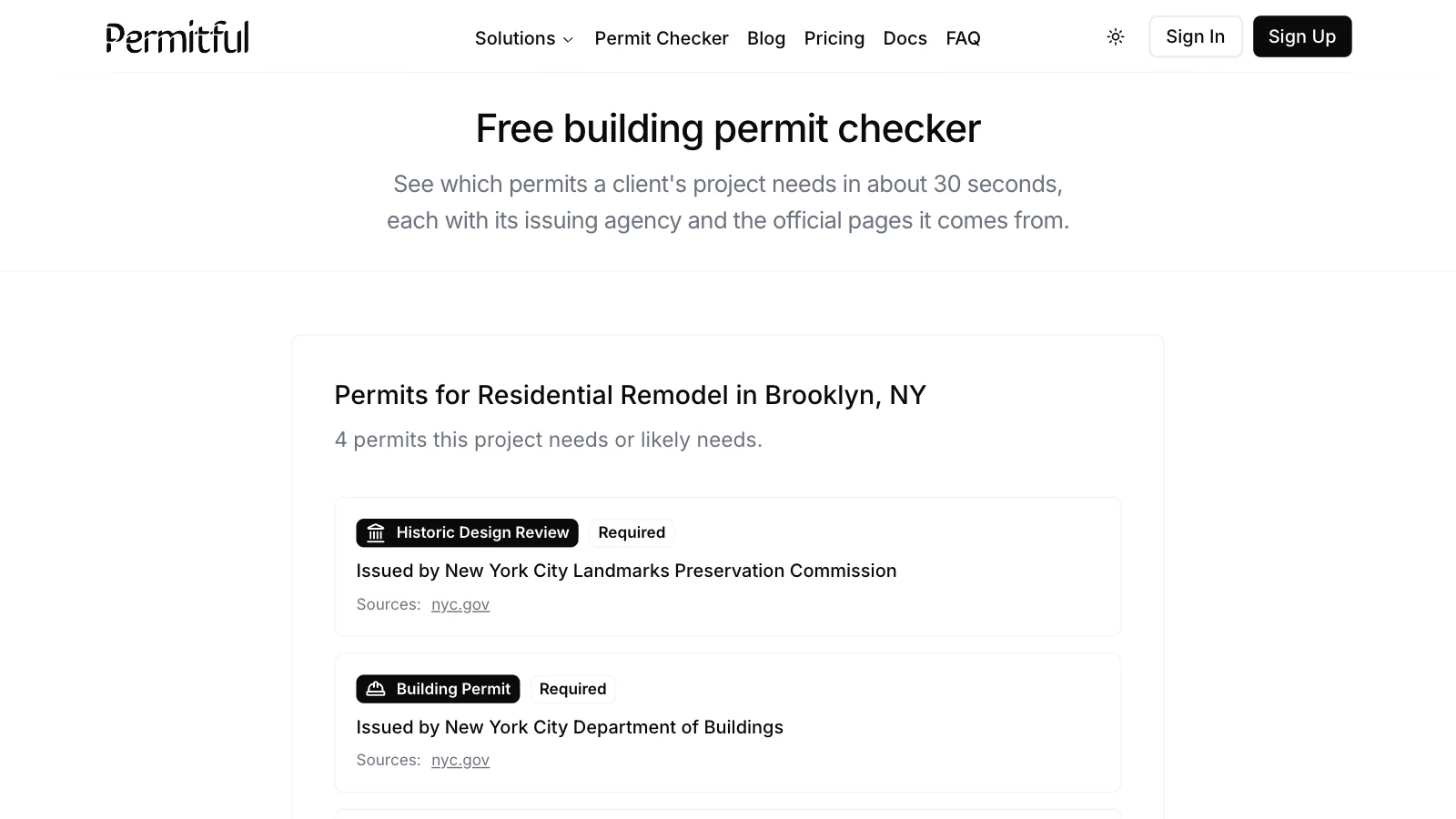
A kitchen, two bathrooms and new rear windows in a Brooklyn brownstone sounds like a Department of Buildings job, and it is. But the house is in the Park Slope Historic District, so the Landmarks Preservation Commission must also issue a permit, including for the window replacement. Overlays like historic districts, coastal zones and floodplains are easy to miss, because nothing about the work itself triggers them. The site does.
What to Check in Any AI Permit List
Whatever tool you use, run these checks before a list goes into a proposal or a schedule:
- Does each permit cite an official page? A government page that names the permit beats a permit service's blog post or a model's memory. If there's no source, treat the permit as a question, not an answer.
- Does it name the issuing agency? "Building permit" isn't enough. Is it the city, the county, the state or a special district? The agency tells you whether the list understood where the site is.
- Does it know whether the site is inside city limits? Ask what happens if the site is unincorporated. If the answer doesn't change, it may not have been checked.
- Does it separate what's required from what might apply? Overlays and thresholds depend on details the tool may not know. A good list tells you which permits are certain and which need checking.
- Is it current? Look at the dates on the pages it cites, especially for programs that have been in the news.
How Permit Advisor Handles It
Permit Advisor is built around those checks, rather than asking a chatbot to remember.
- It searches official sites for your city and county. When you create a project or run the free permit checker, Permit Advisor searches government websites for the project's jurisdiction: the city's, and the county's when it can tell the county from the address. That's how the Manchaca house gets Travis County's development permit, and the Sisters ADU gets both the City's land use permit and Deschutes County's building permits.
- It searches for the work you describe. Mention a pool, a septic system, a seawall or a historic district in the project description, and it runs a separate search for each kind of work it recognizes (up to three), using fixed search terms rather than your description. That's how the Brooklyn brownstone finds the Landmarks Preservation Commission's permit pages.
- It picks from a catalog of known permit types. Suggestions are limited to Permitful's catalog, so each one is a recognizable permit type rather than a name made up on the spot. Whether your town actually issues it is what the sources and the named agency are for. Anything it spots that isn't in the catalog is listed separately, for you to check with the agency.
- It names the agency and cites its sources. Each suggestion says who issues it and, when Permit Advisor found one, links the official page it's based on, so you can check it in a click.
- It tells you how sure it is. Each permit is marked required, likely or might apply, and the "might apply" ones are only added if you choose them.
In our tests, the same AI model answering from memory alone, with no web search, scored about the same in big cities. In small towns and county areas, like the Travis County, Woodstock and Sisters projects, it missed the main permit, named agencies that don't exist, or added permits the town doesn't issue. Searching official sites made those answers much better.
It isn't perfect. In some of our test runs, Permit Advisor still suggested a building permit for the Woodstock addition. That's why suggestions show their sources, and why you should confirm the list with the agency before you apply.
From List to Tracker
A permit list is only the start. In Permitful, the permits you choose from Permit Advisor go straight into the project, and by default each gets its standard milestones, from application through approval and inspection, dated from a start date you pick (four weeks out unless you change it). Adjust the dates as the agency confirms them. The milestones stay private until you choose to show them on the dashboard you share with your client, so the list becomes the schedule you track.
To see what Permit Advisor finds for an address, try the free permit checker; no account needed. The free plan gives you one active project and 3 Permit Advisor runs a day, so you can try it on a project you're scoping now. Pro adds unlimited projects and Advisor runs, client dashboards and a calendar feed of every milestone and permit expiration; see pricing.